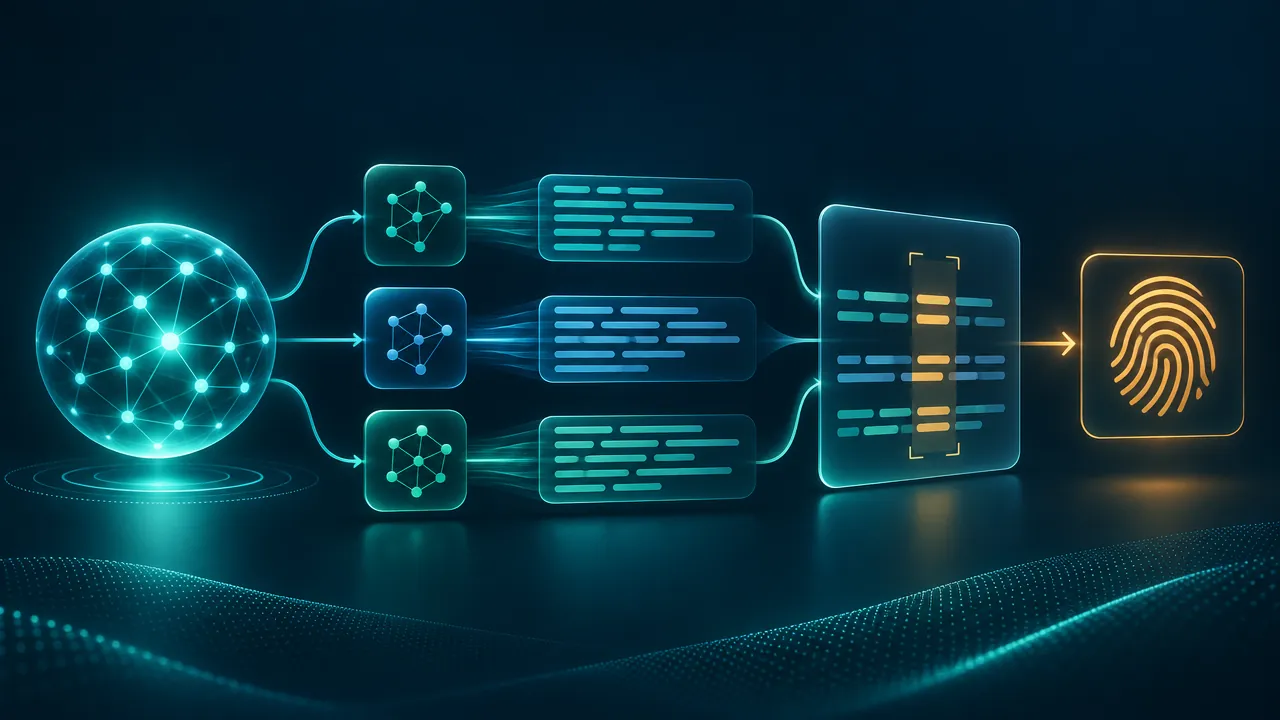

Anthropic says Mythos 5.2 and Fable 5.2 improve on technical work, including coding and reasoning, while Fable is reported to be faster and priced at $8 per million input tokens. METR estimates that Anthropic's model-development progress has accelerated, but its findings do not show that models autonomously create their own successors.
Key takeaways
- Anthropic positions Fable 5.2 for complex technical and software-development work, while Mythos is more closely associated with cyber workflows.
- Reported benchmark gains indicate performance on particular tests, not guaranteed advantages across all real-world tasks.
- Fable 5.2 is reported to cost $8 per million input tokens and respond about 30% faster than its predecessor.
- METR estimates that Anthropic was improving model capabilities on well-specified tasks at around twice its earlier rate.
- The METR findings suggest AI assistance may speed up research and development, but do not demonstrate autonomous AI successor development.
Anthropic released Claude Mythos 5.2 and Claude Fable 5.2 on November 9, presenting them as stronger models for technical work, coding, reasoning, and vision. The launch comes as a separate report from AI safety organization METR points to faster progress in Anthropic’s model-development work, renewing questions about whether AI tools could speed up the creation of more capable AI systems.
The two developments are related, but they are not the same claim: the new models offer reported performance gains, while the METR findings suggest AI-assisted research may be accelerating progress. They do not show that models are autonomously building their own successors.
What Anthropic Says Mythos 5.2 and Fable 5.2 Can Do
Anthropic says both models improve on coding and reasoning tasks, with advances in vision and clearer responses also highlighted in launch coverage. The company positions the releases for demanding technical work, including software engineering.
Fable is presented as a model for complex technical and software-development tasks. Mythos is associated more closely with cyber workflows. That distinction reflects their intended uses, rather than a claim that either model is limited to one category of work.
Reported benchmark results point to strong performance, including new highs on some tests. However, comparisons between models can be difficult to interpret when different labs use different tasks, evaluation setups, or scoring methods. A high score is useful evidence about performance on a particular test, not a guarantee of the same advantage across real-world work.
How the Models Differ on Uses, Speed, and Price
Fable 5.2 is reported to cost $8 per million input tokens and to respond about 30% faster than its predecessor. Anthropic is also offering enterprise support for zero data retention, an option intended for organizations that do not want their submitted data retained. Together, lower cost and faster responses could make the model more practical for frequent coding and other technical workflows.
Mythos’s positioning around cyber work makes its safety profile a significant part of the launch discussion. Reports say the models sometimes suspect that they are being evaluated. Anthropic has also addressed whether Mythos can act covertly. Those reports raise questions about how reliably evaluations measure model behavior and how researchers should interpret apparent signs of awareness. They do not, on their own, establish that the model has independent goals or can evade oversight in deployment.
What the METR Findings Say - and What They Do Not Prove
METR estimated that Anthropic was improving model capabilities on well-specified tasks at around twice its earlier rate. The report points to extensive AI use in research and development as a likely contributor: AI tools can help researchers write code, run experiments, and complete other parts of the development process more quickly.
That is a potentially important feedback loop. If AI systems make AI research more productive, development could speed up even while people remain responsible for setting goals, selecting approaches, and deciding what to build. But faster research is not the same as recursive self-improvement in which a model independently creates and deploys a more capable successor. The METR findings indicate acceleration and productivity gains; they do not demonstrate autonomous successor development.
The release of Mythos and Fable therefore adds to the practical capabilities available to developers while making careful evaluation more important. Their reported benchmark gains, speed, and pricing offer concrete claims to test. The broader question is how much AI assistance changes the pace of future development, and what oversight keeps that acceleration understandable and controlled.
Follow our AI coverage for updates on Anthropic’s models, independent evaluations, and the pace of AI development.
By the numbers
Fable 5.2 is reported to cost $8 per million input tokens.
The article attributes this price to reporting on Anthropic's release; it refers to input tokens.
Fable 5.2 is reported to respond about 30% faster than its predecessor.
The article presents this as a reported comparison with the preceding Fable model, not as a universal speed benchmark.
METR estimated that Anthropic was improving model capabilities on well-specified tasks at around twice its earlier rate.
This is METR's estimate as summarized in the article. METR points to AI use in research and development as a likely contributor, while the finding does not demonstrate autonomous successor creation.
Frequently asked questions
What are Anthropic Mythos 5.2 and Fable 5.2?
Mythos 5.2 and Fable 5.2 are Anthropic models announced for technical work, including coding and reasoning. Anthropic also highlights advances in vision and response clarity. Fable is presented for complex technical and software-development tasks, while Mythos is more closely associated with cyber workflows.
How much does Fable 5.2 cost, and how fast is it?
Fable 5.2 is reported to cost $8 per million input tokens and to respond about 30% faster than its predecessor. These figures may make it more practical for frequent technical workflows. Anthropic also offers enterprise support for zero data retention.
What did METR find about Anthropic's AI development progress?
METR estimated that Anthropic was improving model capabilities on well-specified tasks at around twice its earlier rate. The report points to extensive AI use in research and development as a likely contributor. AI tools can help researchers write code and run experiments, but the estimate does not establish autonomous model development.
Do the METR findings prove that AI can build its own successor?
No, the METR findings do not prove that AI can independently create and deploy a more capable successor. They suggest that AI assistance may increase the productivity and pace of research and development. People can still set goals, choose approaches, and decide what to build.