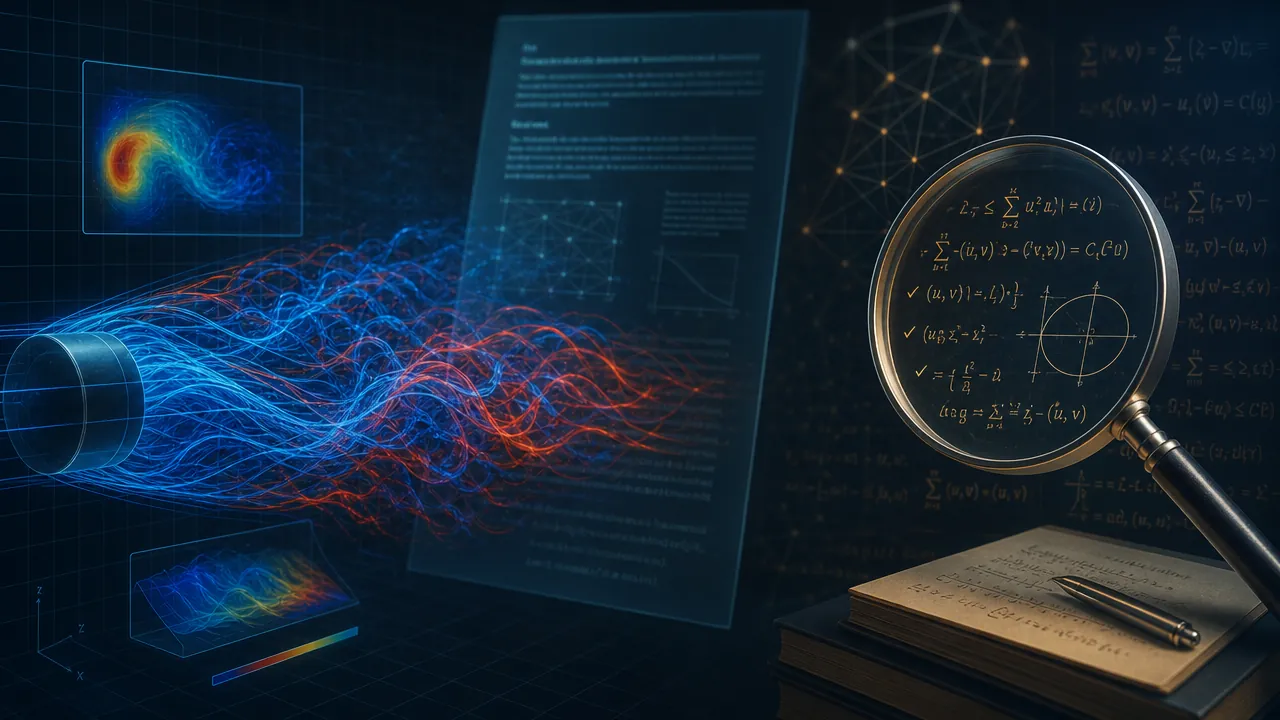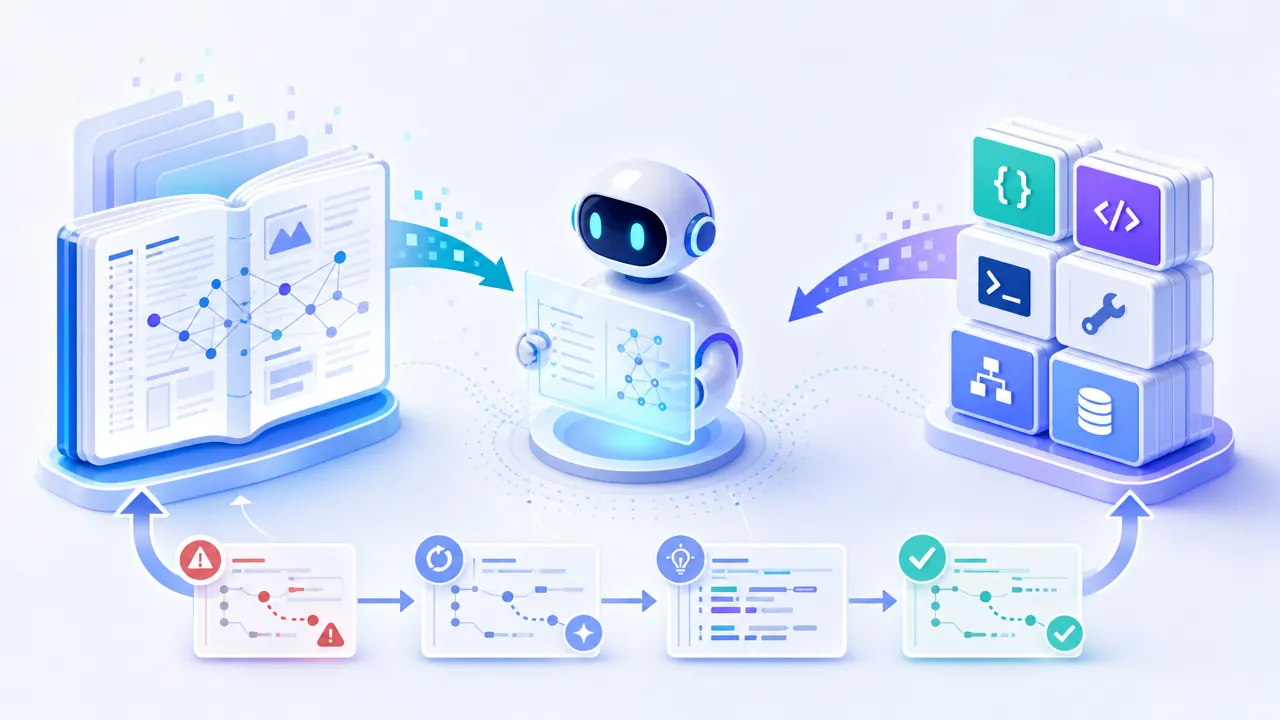

The Mirror Particle world model is designed to simulate how groups of people may behave as motivations, constraints, emotions, prior actions, and cultural conditions change. Its potential value is faster scenario testing for market research, but its accuracy, bias, privacy protections, and performance against real-world outcomes remain to be proven.
Key takeaways
- Mirror Particle is developing an AI world model that aims to simulate human behavior over time rather than generate responses from static personas.
- The proposed system focuses on revealed behavior and contextual forces such as price, trust, social pressure, prior experiences, and competing priorities.
- Potential applications include consumer research, product strategy, advertising and packaging tests, policy analysis, and AI concept evaluation.
- The technology could complement surveys and focus groups by helping teams explore scenarios before investing in larger studies.
- Public reporting describes an early-stage product, so predictions should be treated as hypotheses until transparent benchmarks and real-world validations are available.
Mirror Particle, a San Francisco startup led by co-founder and CEO Abhivyakti Ahuja, is developing an AI world model designed to simulate how groups of people behave over time.
The company’s goal goes beyond generating plausible answers from a fictional consumer persona. It is building a system intended to model the forces behind behavior - including motivations, constraints, emotional triggers, prior actions, and changes in cultural context.
That approach could make the Mirror Particle world model a potential tool for companies that want to test decisions before taking them to the market. But public reporting currently describes the company as early-stage, with pilots and an emerging product rather than a broadly validated system for predicting human behavior.
What the Mirror Particle World Model Is Designed to Do
Many AI tools can role-play a target audience when given a prompt such as, “Act like a budget-conscious parent,” or, “Respond as a first-time smartphone buyer.” Mirror Particle’s proposed approach is more ambitious.
Rather than relying mainly on demographic labels and instructions, the model aims to represent how people’s behavior develops in context. A person’s response to a product, advertisement, policy, or package may depend on price, trust, social pressure, previous experiences, current events, and competing priorities.
A system that can track those factors over time could simulate how different groups respond to changing conditions. For example, a company might test whether a new package design attracts attention, whether a policy change creates resistance, or how an advertising message performs among consumers with different constraints.
The emphasis is on revealed behavior - what people do, not only what they say they would do in a survey or interview.
How Revealed-Behavior Modeling Could Change Market Research
Traditional market research remains useful, but surveys and focus groups often capture reactions at a single point in time. Participants may also describe their intentions differently from how they behave when money, convenience, uncertainty, or social influence enters the decision.
An AI world model for human behavior could complement those methods by enabling continuous scenario testing. Potential applications for Mirror Particle AI include:
- Market research and consumer segmentation
- Brand and product strategy
- AI product concept testing
- Forecasting responses to advertising and packaging
- Testing possible reactions to public policies
- Exploring how consumer behavior changes as circumstances shift
A product team could use this kind of system to compare several concepts before commissioning a large research study. A brand could examine how a campaign might perform across different motivations rather than simply asking which message respondents prefer. Researchers could also use simulations to identify questions or scenarios that deserve validation with real participants.
The value, if the approach works, would not be replacing consumers with software. It would be helping teams explore more possibilities quickly and focus human research on the decisions where real-world evidence matters most.
What Mirror Particle Still Needs to Prove
The central question is whether a model can produce predictions that hold up outside its training data and controlled pilots. Generating a convincing explanation of behavior is not the same as forecasting behavior accurately.
Accuracy, bias, privacy, and cultural change
A human behavior model could inherit bias from the data used to build it. If some communities are underrepresented, their preferences and constraints may be modeled poorly. Historical data can also reproduce past discrimination while presenting the result as an objective prediction.
Privacy is another major concern. Modeling revealed behavior may require sensitive information about purchases, media habits, location, or personal circumstances. Companies using predictive consumer insights would need clear rules for consent, data protection, access, and accountability.
Cultural change creates a further challenge. Motivations and norms shift. A model trained on yesterday’s behavior may struggle with a new economic climate, emerging technology, or a sudden change in public sentiment. Predictions should therefore be treated as probabilities and hypotheses, not as definitive judgments about individuals or groups.
Why the technology remains an emerging product
Available reporting positions Mirror Particle as an early company developing and piloting its product. That makes the concept notable, but it also limits what can currently be concluded about reliability, scale, and performance against conventional research.
For now, the Mirror Particle world model is best understood as an emerging attempt to make consumer research more dynamic. Its progress will depend on transparent evaluations, comparisons with real-world outcomes, and safeguards that keep simulations from being mistaken for people.
Follow the development of AI world models to see whether predictive consumer insights can move from an appealing concept to a dependable part of product research.
By the numbers
Public reporting describes Mirror Particle as an early-stage company with pilots and an emerging product, rather than a broadly validated predictive system.
This status is based on the project context and available reporting summarized in the article; no established production-scale performance claim is provided.
The article identifies six potential application areas for the technology: market research, consumer segmentation, brand and product strategy, concept testing, advertising and packaging analysis, and policy-response exploration.
This count is derived from the article's list of proposed applications, not from an independently measured deployment record.
No public accuracy percentage, independently replicated benchmark, or validated lift over conventional research is reported in the article.
The absence of a reported benchmark is itself a key limitation when assessing claims about AI prediction of human behavior.
Step by step
- 01
Define the behavior scenario
Specify the product, policy, message, or market decision being tested and identify the audience groups, constraints, and changing conditions that may affect behavior.
- 02
Model contextual motivations
Represent factors such as price, trust, social influence, prior experiences, emotional triggers, and competing priorities instead of relying only on demographic labels.
- 03
Simulate multiple outcomes
Run the scenario across different audience segments and changing conditions to compare likely actions, resistance, adoption, or shifts in preference.
- 04
Compare predictions with real evidence
Validate simulated outcomes against surveys, behavioral data, pilots, or observed market results before using the model to guide consequential decisions.
- 05
Audit bias and privacy safeguards
Review data representativeness, consent, security, access controls, and potential discriminatory effects before deploying predictive consumer insights.
Frequently asked questions
What is the Mirror Particle world model?
The Mirror Particle world model is an emerging AI system intended to simulate how groups of people behave over time. It aims to account for motivations, constraints, emotional triggers, previous actions, and cultural context. Public reporting characterizes the company and product as early-stage rather than broadly validated.
How could Mirror Particle predict human behavior?
Mirror Particle could predict behavior by modeling how people respond to changing circumstances rather than treating them as fixed personas. Relevant factors may include price, trust, social pressure, prior experiences, current events, and competing priorities. The resulting simulations would still need comparison with observed behavior to establish reliability.
What could Mirror Particle AI be used for?
Mirror Particle AI could be used for market research, product strategy, consumer segmentation, advertising tests, packaging evaluation, policy analysis, and AI concept testing. Teams could use simulations to compare ideas before commissioning larger research studies. The system would complement rather than replace research with real participants.
Can the Mirror Particle world model accurately predict consumers?
Its accuracy has not been established by publicly reported, independent benchmarks described in the article. A convincing explanation of behavior does not necessarily produce reliable forecasts outside the training data or controlled pilots. Performance should be tested against real-world outcomes across groups, contexts, and time periods.
What are the risks of AI models that predict human behavior?
The main risks include bias, privacy violations, cultural drift, and treating probabilistic predictions as definitive judgments. Historical or incomplete data may reproduce discrimination, while sensitive behavioral data can create consent and governance problems. Organizations need transparent evaluations, safeguards, and human oversight before acting on model outputs.