Anthropic OSS Scanner provides eligible open-source projects with free, recurring AI-generated security scans and vulnerability reports. The reports can help identify code that needs investigation, but maintainers must validate findings because Anthropic does not provide human review or triage.
Key takeaways
- Anthropic OSS Scanner is an opt-in service offering free, recurring security scans for eligible open-source projects.
- The tool uses Anthropic's AI models to identify potential vulnerabilities and generate security reports.
- AI-generated findings are early-warning signals, not confirmed vulnerabilities or complete security assessments.
- Maintainers should reproduce, review, and independently test important findings before taking action.
- OSS Scanner should complement manual review, dependency monitoring, static analysis, and responsible disclosure processes.
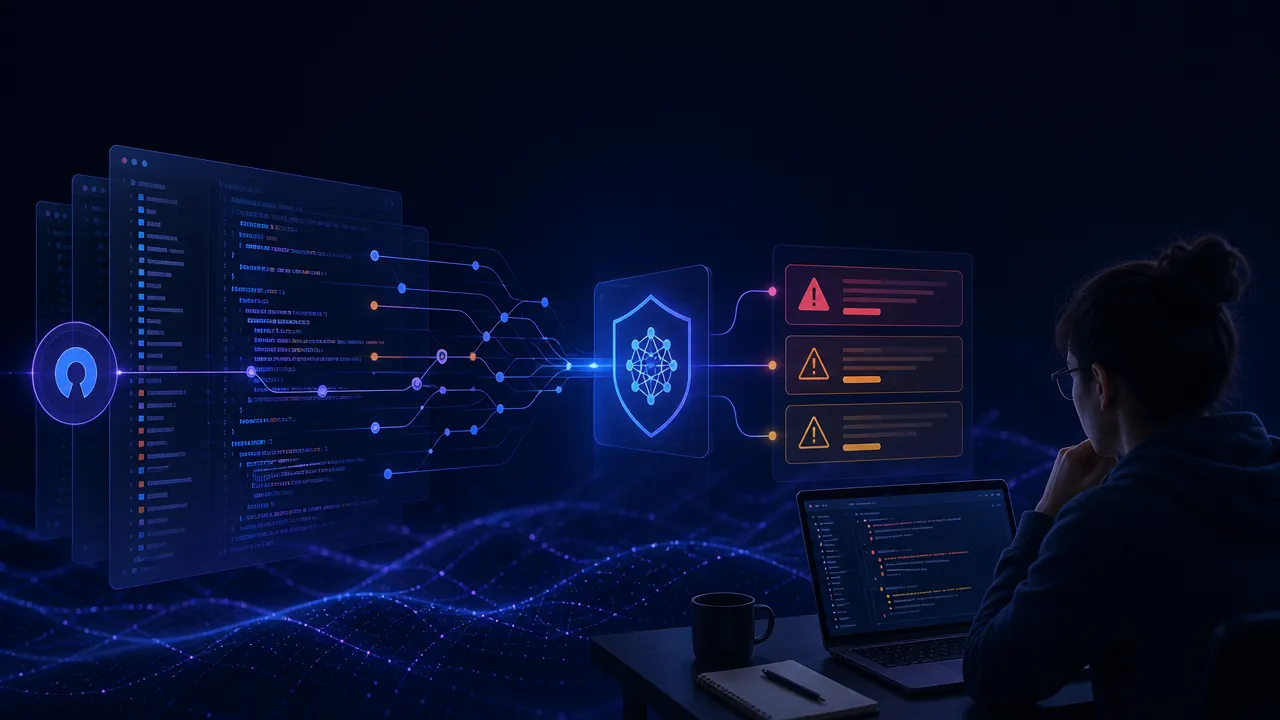
Anthropic has launched OSS Scanner, an opt-in service that provides free, periodic AI security scans for open-source projects. The company says the service uses its most capable models to look for potential vulnerabilities and produce security reports for participating maintainers.
The launch gives open-source teams an additional way to find security issues, particularly projects with limited time or resources for regular analysis. It also highlights an important limitation: OSS Scanner reports are generated entirely by models and do not receive human review or triage from Anthropic.
What Anthropic OSS Scanner Offers
According to Anthropic, maintainers can choose to have eligible open-source projects scanned on a recurring basis. The service examines project code for possible weaknesses and returns an AI-generated report describing its findings.
That recurring approach could help projects identify problems sooner than occasional manual reviews alone. Open-source software is often maintained by small teams or volunteers, and security checks may compete with feature work, bug fixes, and release management. A free scanning service can lower the barrier to adding another layer of oversight.
The scans are best understood as an early-warning system rather than a complete security assessment. They may point maintainers toward suspicious code, unsafe assumptions, or areas that deserve closer investigation, without establishing that a vulnerability is real or exploitable.
How AI-Generated Vulnerability Reports Could Help Maintainers
AI vulnerability scanning can make security analysis more frequent and scalable. Instead of waiting for a researcher or maintainer to inspect every relevant change, a project could receive automated suggestions across its codebase at regular intervals.
For example, a report might draw attention to an input-handling path, an authorization check, or a dependency interaction that warrants testing. Maintainers could then reproduce the behavior, assess its impact, and decide whether to fix it, document it, or close the finding as invalid.
The potential value is not limited to finding previously unknown flaws. Automated reports may also help maintainers prioritize security work by grouping related concerns and explaining why a section of code appears risky. For projects that lack dedicated security staff, that context could make an initial review more manageable.
Anthropic's launch reflects a broader push to apply AI to open-source project security. As software supply chains grow more complex, automated tools are increasingly being used alongside code review, dependency monitoring, static analysis, and penetration testing.
Why OSS Scanner Findings Still Need Human Review
Speed and coverage come with a trade-off. Because OSS Scanner reports are model-generated and not reviewed or triaged by Anthropic staff, they may contain incorrect, incomplete, or invalid findings. A report that sounds convincing is not necessarily evidence of a confirmed vulnerability.
Maintainers should validate each important result before treating it as a security issue. That process can include:
- Reproducing the reported behavior in a controlled environment
- Reviewing the relevant code and its assumptions
- Testing whether an attacker could reach and exploit the suspected flaw
- Checking the finding with established security tools or an independent reviewer
- Following the project's responsible disclosure and release procedures when a real issue is confirmed
This validation is especially important before publishing an advisory, assigning a severity rating, or urging users to upgrade. False positives can consume scarce maintainer time, while false negatives mean that no single scanner should replace broader security practices.
For open-source teams, Anthropic OSS Scanner may be useful as a free additional signal - not as a substitute for manual code review, established security tooling, or responsible vulnerability triage. Reviewing your project's security process and adding automated scans where appropriate can improve the chances of catching problems before they affect users.
By the numbers
OSS Scanner is offered free of charge to eligible open-source projects.
Anthropic's launch description, as reported in the article, presents the service as a free way for maintainers to add recurring security analysis.
Scans can run periodically on a recurring basis rather than only as one-time reviews.
Anthropic's service description says participating maintainers can choose recurring scans for eligible projects.
OSS Scanner reports are model-generated and receive no human review or triage from Anthropic.
The article explicitly identifies this limitation in Anthropic's launch details, making independent validation necessary.
Step by step
- 01
Opt in an eligible project
Enroll the open-source project in Anthropic OSS Scanner and confirm that recurring scans are appropriate for its codebase and maintenance process.
- 02
Review the generated report
Read each reported issue, inspect the affected files and assumptions, and separate actionable findings from unclear or low-confidence suggestions.
- 03
Reproduce the reported behavior
Test the suspected issue in a controlled environment to determine whether the described behavior actually occurs under realistic conditions.
- 04
Assess exploitability and impact
Check whether an attacker can reach the affected code, identify the required conditions, and evaluate the potential security impact.
- 05
Validate with independent controls
Compare important findings against established security tools, manual code review, or an independent security reviewer before confirming an issue.
- 06
Follow responsible disclosure procedures
Create an advisory, assign severity, prepare a fix, and communicate upgrade guidance only after the vulnerability has been confirmed.
Frequently asked questions
What is Anthropic OSS Scanner?
Anthropic OSS Scanner is an opt-in service that performs recurring AI security scans for eligible open-source projects. It examines project code for potential weaknesses and returns reports for maintainers to investigate. Anthropic describes the service as an additional security signal rather than a complete security assessment.
Are Anthropic AI security scans free?
Yes, Anthropic says OSS Scanner provides free scans for eligible open-source projects. The service is intended to reduce the cost and effort of recurring security analysis for projects that may lack dedicated security staff. Eligibility and participation still depend on the service's enrollment requirements.
Can maintainers treat OSS Scanner findings as confirmed vulnerabilities?
No, maintainers should treat OSS Scanner findings as leads that require validation. The reports are generated by models and do not receive human review or triage from Anthropic, so they may include false positives, incomplete analysis, or invalid findings. Teams should reproduce the behavior and assess exploitability before publishing an advisory or assigning severity.
How should open-source teams validate an AI-generated security report?
Teams should reproduce the reported behavior, review the relevant code, test attacker reachability, and verify the result with independent security controls. Manual review, static analysis, dependency monitoring, or an independent researcher can provide additional evidence. Confirmed issues should then follow the project's responsible disclosure and release procedures.